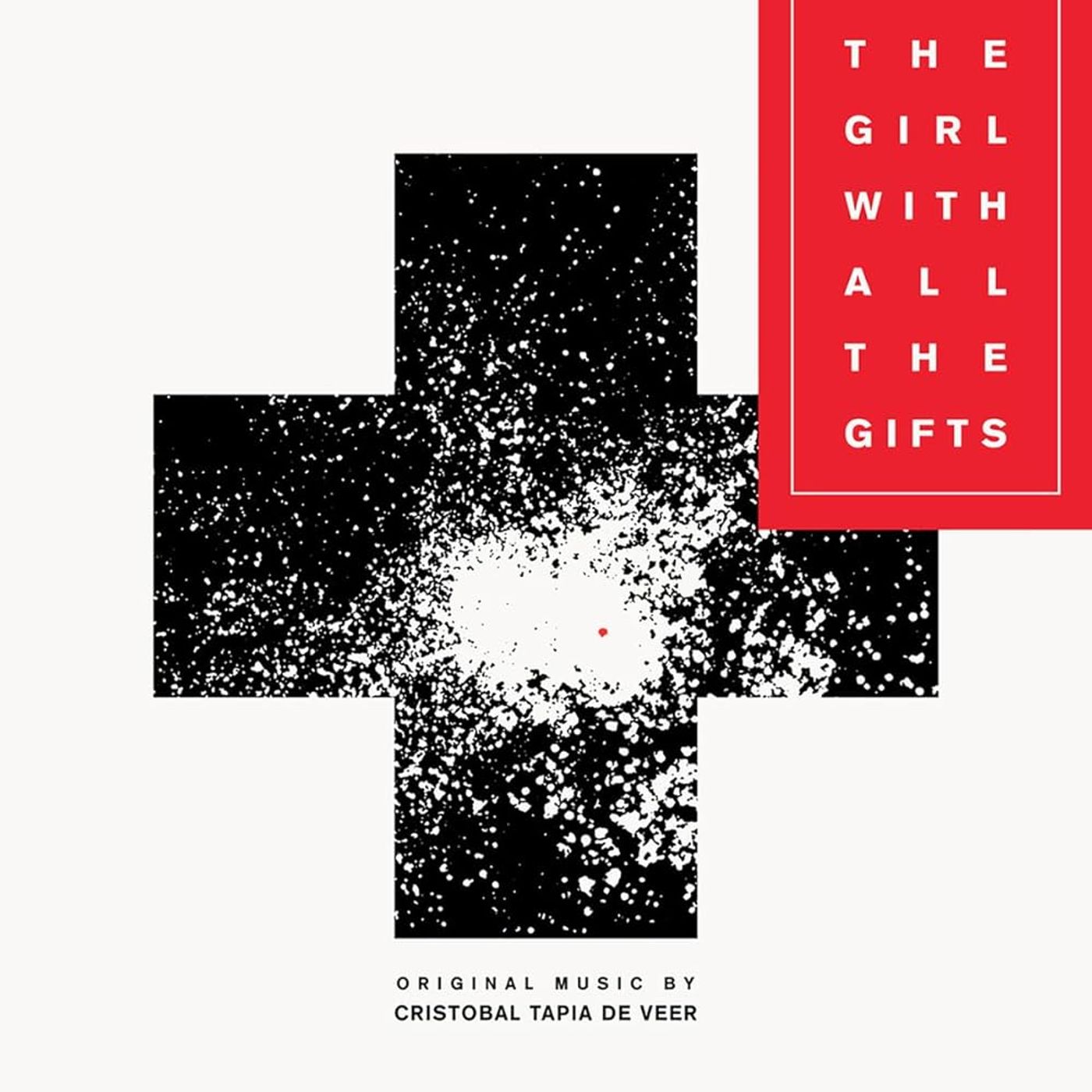
Queen's Wood, North London. On any given autumn afternoon, when the mist settles between the oaks and the paths narrow to single file, it is possible to feel simultaneously in the city and entirely lost to it. The wood is old growth — ancient enough that its logic precedes the roads that now contain it, old enough to remember what occupied this ground before the houses came. It was somewhere here, in this pocket of half-feral London, that Cristobal Tapia de Veer made his music for The Girl With All The Gifts — in a house he describes simply as somewhere in Queen's Wood. The location matters. It always does.
Tapia de Veer is not the kind of composer that Hollywood normally produces. He was not trained there, does not think there, and has made a career out of principled refusal to sound like anything made there. He was born during the 1973 Chilean coup d'état, his parents fled first to Paris, then back to Chile, and eventually he and his mother found political refuge in Québec — a childhood shaped by displacement, transition, the experience of arriving somewhere that does not quite have a name for what you are. He trained as a percussionist at the Conservatoire de musique du Québec, took a detour into electro-dance pop with his band One Ton, and then found his way, almost accidentally, into television scoring. The accident was a good one. His work on the Channel 4 conspiracy thriller Utopia in 2013 made him briefly the most talked-about composer in British television — the judges noting that his music blurred the lines between sound design and score, creating a soundtrack that felt like it was being played inside your head.
That phrase is precise enough to be worth sitting with. Most film music works from the outside in — it tells you how to feel, manages your responses, fills the emotional spaces that the image cannot quite complete. Tapia de Veer's music works from somewhere else entirely. It does not score the image so much as inhabit it, colonising your nervous system from a direction you cannot quite locate. When it arrived in Utopia, it sounded genuinely unprecedented: primal, rhythmically jagged, threaded with voices that seemed to be speaking some language just beyond the edge of comprehension. Directors began calling him asking for what industry shorthand had already reduced to "the Utopia sound" — a phrase that managed simultaneously to acknowledge his originality and to misunderstand it entirely. He has spoken about this himself with characteristic wryness: the phone never stopped ringing, and what people wanted was his particular quality of strangeness, without quite grasping that strangeness cannot be dialled up on request.
By the time director Colm McCarthy brought him to The Girl With All The Gifts — a 2016 British post-apocalyptic horror film written by M.R. Carey, adapted from his own novel, starring Gemma Arterton, Paddy Considine, and Glenn Close — Tapia de Veer had refined his methods without softening them. The film is set in a Britain some years after a fungal pandemic has converted the majority of the population into fast-moving, flesh-eating hungries. At its centre is Melanie, a child hybrid — part human, part infected — who is, by any measurable standard, more alive to the world than the frightened soldiers guarding her. The film's subject, at its core, is inheritance: what we pass on, what survives us, who gets to carry the future forward when the species that built the future has forfeited its claim to it. It was a subject that seemed to find Tapia de Veer at a cellular level. The film opened the Locarno Film Festival and won the public choice award; Tapia de Veer took best original music at the Festival International du Film Fantastique de Gérardmer. The prizes were deserved, but they are the least interesting thing about what he made.
The score opens with Gifted and immediately establishes its emotional coordinates. There is a female voice — Kim Neundorf, Tapia de Veer's regular collaborator — placed high and exposed, the melody circling a minor interval with the patience of something that does not need to hurry. Beneath it, a pulse. Not a heartbeat exactly, but something close to one: more felt than heard, the kind of rhythm the body recognises before the mind catches up. The effect is of waking into a world you half-recognise, where the rules of what is threatening and what is beautiful have been fundamentally redistributed. This is precisely the film's moral landscape, rendered in sound before a single image is seen.
She Who Brings Gifts, nearly six minutes long and the score's most formally ambitious single piece, operates as a kind of extended thesis statement. It begins in near-silence — texture without melody, the suggestion of breath without breath itself — before building, with extraordinary patience, toward something that resembles a lullaby only in the way that a memory resembles the thing it recalls: at an angle, with crucial details missing. The voices layer and separate, layer and separate. There is a moment, somewhere past the three-minute mark, where the music achieves a kind of terrible beauty — the adjective is not decorative — in which the listener finds themselves moved by something they cannot fully account for. This is the score's highest achievement and its most unsettling one. Tapia de Veer has found a way to make grief feel like wonder, or wonder feel like grief, and he refuses to arbitrate between them.
Abyss, at five and a half minutes, is where the score confronts its own darkness most directly. It does not build so much as accumulate, adding layer upon layer of processed voice and fractured percussion until the music seems to be breathing at multiple tempos simultaneously, each of them slightly out of phase with the others. The effect is less horror than mourning: the sound of a civilisation in the process of recollecting itself, reaching for forms that may no longer be available to it. The voices resolve almost into melody before pulling apart again — a gesture so precisely calibrated to the film's own ambivalence about what constitutes humanity that one wonders whether the music was written for the film or the film conceived around the music.
Walkabout offers brief respite, though the word respite is inadequate to what Tapia de Veer provides: a kind of provisional tenderness, music that sounds like daylight filtered through leaves, which in the context of everything that surrounds it feels almost unbearably fragile. It is the score's most exposed moment, and its most purely beautiful one. The vulnerability is the point.
They Eat Their Way Out is the album's most difficult track — and its most honest. Here Tapia de Veer permits himself real ugliness: the percussion becomes abrasive, the voices distort into something close to shrieking, and the ambient warmth that characterises the rest of the score is deliberately withdrawn. It does not work entirely. There are moments where the texture collapses into mere noise, where the discipline that makes the rest of the score so compelling goes briefly absent. This is worth noting not as a failure but as evidence of ambition: Tapia de Veer is trying to find a sound for something genuinely unprecedented within the genre, and not every experiment resolves cleanly. A lesser composer would have smoothed it over. The refusal to do so is, in its way, a form of integrity.
The album closes with Tree of Life, nearly seven minutes, the longest piece on the record, and the one that does the hardest emotional work. It takes everything the score has assembled — the lullaby fragments, the percussive urgency, the layered voices, the terrible fragile beauty — and holds them simultaneously, without resolution. This is not a conventional ending. It does not offer catharsis. What it offers instead is something closer to acceptance: an acknowledgement that the questions the film has raised are not going to be answered, that the species stumbling forward at the end of the story is not the one that started it, and that this may, in some register we have not yet fully developed the language for, be all right.
Listened to away from the film — as the album, across its twenty-five movements, insists upon being heard — it sits alongside the finest British screen music of the last decade: in the company of Mica Levi's work for Under The Skin, of Clint Mansell's score for Moon, of Portishead's contribution to The Protective Impulse. It invites comparison, further back, with Ennio Morricone's most unconventional work for Argento — not for sonic resemblance but for the same quality of emotional complexity, the same refusal to let genre dictate register. Closer still, perhaps, is Jonny Greenwood's work for There Will Be Blood: classical training deployed against itself, the academy's tools turned toward rupture. Tapia de Veer has arrived at a similar place by a different route — via Chilean displacement, Québécois conservatoire training, an electro-dance detour, a wood in North London, and the accumulated wisdom of working with directors willing to leave him largely alone. The route matters. It is why the music sounds like nothing else.